Holy Cross Orthodox Church
Welcome!

Updates

See “The VOICE” for Sunday, May 13, 2012

Photos: Holy Protection Monastery Visit


“The Samaritan Woman came to the well in faith; She saw You, the Water of Wisdom, and drank abundantly.  She inherited the Kingdom on High and is ever glorified!”

Welcome to Holy Cross!

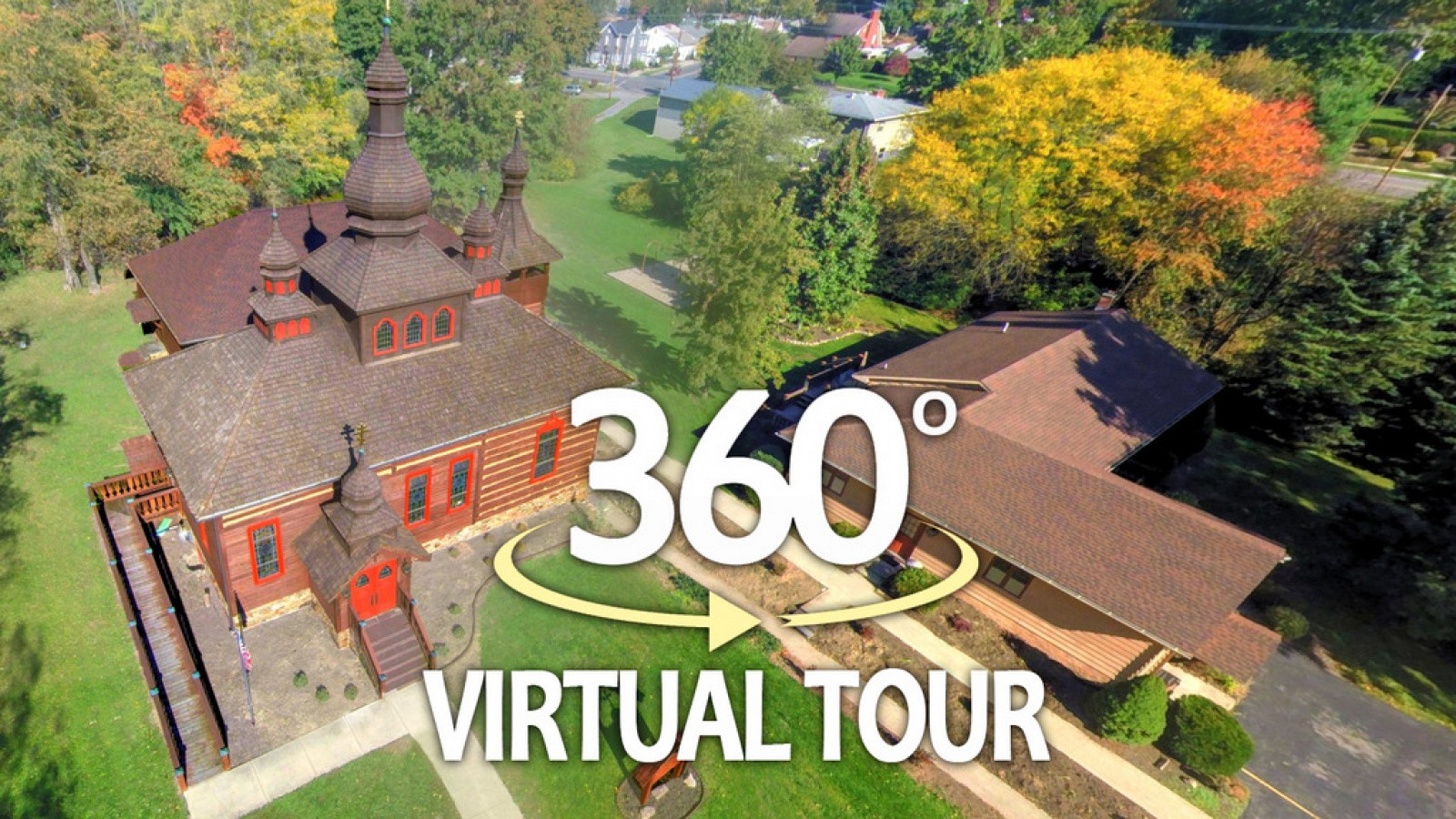
Holy Cross is the only Orthodox church in six counties of northcentral Pennsylvania and one of the most unique church buildings you'll find anywhere!  The parish, founded in 1977, is part of the Diocese of Eastern Pennsylvania (doepa.org) of the Orthodox Church in America (oca.org).

The Orthodox Church dates back to the day of Pentecost as the One, Holy, Catholic and Apostolic Church of the eastern Roman Empire and exists to give glory to our Lord, God and Savior Jesus Christ, His Father and the Holy Spirit; to worship the Holy Trinity in spirit and in truth and to perpetuate the saving ministry of Christ through the faith once for all delivered to the saints.  To this day, She remains unchanged in doctrine and order of worship and stands as a humble witness to the life and belief of the continuing Christian flock.  She was and is the Church of the martyrs and the Holy Fathers who defended the divinity and humanity of the Lord Jesus Christ and the proper understanding of the Holy Trinity's revelation to It's creation.

Orthodoxy came to America through Alaska in the 18th century and, fed by immigration, spread across the continent, often appearing as an insulated sect open only to people of certain ethnic backgrounds.

This unfortunate image of the Church has changed dramatically in recent years as the Orthodox Church has turned Her attention to all Americans who are seeking the joys of fullness and continuity in their knowledge of God's revelation.

This transition is beautifully exemplified at Holy Cross Orthodox Church in Williamsport PA, where all services are in English and people of all backgrounds are welcomed into Orthodoxy's life of communion with God and the Church's calm, pastoral, yet unflinching resistance to the tragic and seemingly unending compromise of truth and life in contemporary society.

The basic structure of Holy Cross Church is a former 200-year-old log barn of hand-hewn timbers, painstakingly dismantled, delivered and reassembled on site from a location some five miles away. Beginning in June, 1987, over the next 17 months, the pastor and parishioners volunteered their talents and tireless efforts in all phases of the construction process.  The use of logs seemed appropriate for Williamsport, the one-time 'log capital of the world'.  The distinctive 'onion domes' were built on site and hoisted into place as the crowning glory of the church, surmounted by hand-crafted crosses plated with gold leaf.  The church was formally consecrated on November 12, 1988 (and has since become affectionately well-known throughout the region as "the little, wooden Orthodox church").

In 1997-98, a beautification project was undertaken including the construction and installation of a new icon screen and hand-painted icons. The church interior has been referred to as "something like heaven".  Traditional stained glass windows enhance the incredible beauty of the timeless Orthodox iconography.

The parish opened its Orthodox Fellowship Center located directly behind the church in July, 2002 -- another parishioner-built structure. After its opening, the church basement was transformed into our education center with classrooms and a library.  Next to the church is our rectory and parish office.

You are welcome to join us in worship:

SATURDAYS, Vespers at 6:30 pm

SUNDAYS, Divine Liturgy at 10:00 am

Weekdays as announced

Our worship is sung by the priest and people (no musical instruments). Though we usually stand in worship, we do have pews.  Children participate in worship together with their families.  We offer a host of ministries, weekly education programs and seasonal inquirers sessions.

Thanks for visiting our website!

Call us  for further info at (570) 322-3020.

%
 

THE ORTHODOX CHURCH

An Introduction

The Orthodox Church was founded by our Lord Jesus Christ and is the living manifestation of His presence in the history of the mankind. The most conspicuous characteristics of Orthodoxy are its rich liturgical life and its faithfulness to the apostolic tradition. It is believed by Orthodox Christians that their Church has preserved the tradition and continuity of the ancient Church in its fullness compared to other Christian denominations which have departed from the common tradition of the Church of the first ten centuries. Today Orthodox Church numbers approximately 300 million Christians who follow the faith and practices that were defined by the first seven Ecumenical Councils. The word orthodox ("right belief” or “right glory") has traditionally been used, in the Greek-speaking Christian world, to designate communities, or individuals, who preserved the true faith (as defined by those councils), as opposed to those who were declared heretical. The official designation of the church in its liturgical and canonical texts is "the Orthodox Catholic Church" (gr. catholicos = universal). 

The Orthodox Church is a family of "autocephalous" (self governing) churches, with the Ecumenical (= universal) Patriarch of Constantinople holding titular or honorary primacy as primus inter pares (the first among equals). The Orthodox Church is not a centralized organization headed by a pontiff. The unity of the Church is rather manifested in common faith and communion in the sacraments and no one but Christ Himself is the real Head of the Church. The number of autocephalous churches has varied in history. Today there are many: the Church of Constantinople (Istanbul), the Church of Alexandria (Egypt), the Church of Antioch (with headquarters in Damascus, Syria), and the Churches of Jerusalem, Russia, Serbia, Romania, Bulgaria, Georgia, Cyprus, Greece, Poland, Albania and America. 

There are also "autonomous" churches (retaining a token canonical dependence upon a mother see) in Czech and Slovak republics, Sinai, Crete, Finland, Japan, China and Ukraine. In addition there is also a large Orthodox Diaspora scattered all over the world and administratively divided among various jurisdictions (dependencies of the above mentioned autocephalous churches). The first nine autocephalous churches are headed by patriarchs, the others by archbishops or metropolitans. These titles are strictly honorary as all bishops are completely equal in the power granted to them by the Holy Spirit.   

The order of precedence in which the autocephalous churches are listed does not reflect their actual influence or numerical importance. The Patriarchates of Constantinople, Alexandria, and Antioch, for example, present only shadows of their past glory. Yet there remains a consensus that Constantinople's primacy of honor, recognized by the ancient canons because it was the capital of the ancient Byzantine empire, should remain as a symbol and tool of church unity and cooperation. Modern pan-Orthodox conferences were thus convoked by the ecumenical patriarch of Constantinople. Several of the autocephalous churches are de facto national churches, by far the largest being the Russian Church; however, it is not the criterion of nationality but rather the territorial principle that is the norm of organization in the Orthodox Church. 

In the wider theological sense "Orthodoxy is not merely a type of purely earthly organization which is headed by patriarchs, bishops and priests who hold the ministry in the Church which officially is called "Orthodox." Orthodoxy is the mystical "Body of Christ," the Head of which is Christ Himself (see Eph. 1:22-23 and Col. 1:18, 24 et seq.), and its composition includes not only priests but all who truly believe in Christ, who have entered in a lawful way through Holy Baptism into the Church He founded, those living upon the earth and those who have died in the Faith and in piety."

The Great Schism between the Eastern and the Western Church (1054) was the culmination of a gradual process of estrangement between the east and west that began in the first centuries of the Christian Era and continued through the Middle Ages. Linguistic and cultural differences, as well as political events, contributed to the estrangement. From the 4th to the 11th century, Constantinople, the center of Eastern Christianity, was also the capital of the Eastern Roman, or Byzantine, Empire, while Rome, after the barbarian invasions, fell under the influence of the Holy Roman Empire of the West, a political rival. In the West, theology remained under the influence of St. Augustine of Hippo (354-430) and gradually lost its immediate contact with the rich theological tradition of the Christian East. In the same time the Roman See was almost completely overtaken by Franks. Theological differences could have probably been settled if there were not two different concepts of church authority. The growth of Roman primacy, based on the concept of the apostolic origin of the Church of Rome which claimed not only titular but also jurisdictional authority above other churches, was incompatible with the traditional Orthodox ecclesiology. The Eastern Christians considered all churches as sister churches and understood the primacy of the Roman bishop only as primus inter pares among his brother bishops. For the East, the highest authority in settling doctrinal disputes could by no means be the authority of a single Church or a single bishop but an Ecumenical Council of all sister churches. In the course of time the Church of Rome adopted various wrong teachings which were not based in the Tradition and finally proclaimed the teaching of the Pope's infallibility when teaching ex cathedra. This widened the gap even more between the Christian East and West. The Protestant communities which split from Rome in the course of centuries diverged even more from the teaching of the Holy Fathers and the Holy Ecumenical Councils. Due to these serious dogmatic differences the Orthodox Church is not in communion with the Roman Catholic and Protestant communities. More traditional Orthodox theologians do not recognize the ecclesial and salvific character of these Western churches at all, while the more liberal ones accept that the Holy Spirit acts to a certain degree within these communities although they do not possess the fullness of grace and spiritual gifts like the Orthodox Church. Many serious Orthodox theologians are of the opinion that between Orthodoxy and heterodox confessions, especially in the sphere of spiritual experience, the understanding of God and salvation, there exists an ontological difference which cannot be simply ascribed to cultural and intellectual estrangement of the East and West but is a direct consequence of a gradual abandonment of the sacred tradition by heterodox Christians. 

At the time of the Schism of 1054 between Rome and Constantinople, the membership of the Eastern Orthodox Church was spread throughout the Middle East, the Balkans, and Russia, with its center in Constantinople, the capital of the Byzantine Empire, which was also called New Rome. The vicissitudes of history have greatly modified the internal structures of the Orthodox Church, but, even today, the bulk of its members live in the same geographic areas. Missionary expansion toward Asia and emigration toward the West, however, have helped to maintain the importance of Orthodoxy worldwide. Today, the Orthodox Church is present almost everywhere in the world and is bearing witness of true, apostolic and patristic tradition to all peoples. 

The Orthodox Church is well known for its developed monasticism. The uninterrupted monastic tradition of Orthodox Christianity can be traced from the Egyptian desert monasteries of the 3rd and 4th centuries. Soon monasticism had spread all over the Mediterranean basin and Europe: in Palestine, Syria, Cappadocia, Gaul, Ireland, Italy, Greece and Slavic countries. Monasticism has always been a beacon of Orthodoxy and has made and continues to make a strong and lasting impact on Orthodox spirituality. 

The Orthodox Church today is an invaluable treasury of the rich liturgical tradition handed down from the earliest centuries of Christianity. The sense of the sacred, the beauty and grandeur of the Orthodox Divine Liturgy make the presence of heaven on earth live and intensive. Orthodox Church art and music has a very functional role in the liturgical life and helps even the bodily senses to feel the spiritual grandeur of the Lord's mysteries. Orthodox icons are not simply beautiful works of art which have certain aesthetic and didactic functions. They are primarily the means through which we experience the reality of the Heavenly Kingdom on earth. The holy icons enshrine the immeasurable depth of the mystery of Christ's incarnation in defense of which thousands of martyrs sacrificed their lives.

--- from orthodoxinfo.com

Mount Athos

CBS' 60 Minutes Visits Mt. Athos
Date: 04/26/2011
"60 Minutes gets extremely rare access to the monasteries at Mt. Athos, perhaps one of the most sacred places in Christianity."


HomeThe VoicePhotosOCN Daily ReadingsAdministrationMinistryBucknell OCFJourneys to OrthodoxyAbout OrthodoxyMoral AffirmationsContact InformationDriving Directions
  Home Back Top Powered by Orthodox Web Solutions